
Ganesh Chaturthi Food Traditions: Modak, Prasad & More
Share on Social Media
Why Food Sits at the Heart of Ganesh Chaturthi
Every year in Bhadrapada, homes across India welcome Lord Ganesha with flowers, chants, and — most of all — food. This year, Ganesh Chaturthi falls on Monday, September 14, 2026, kicking off ten days of celebration that end with Ganesh Visarjan on September 25. Beyond the pandal lights and drumbeats, the festival has always been a kitchen-centered occasion, where the aroma of steaming modak and simmering prasad fills the house long before the puja begins.
If you grew up with this festival, you know the food isn't an afterthought. It's the offering itself.
Modak: The Sweet at the Center of It All
No Ganesh Chaturthi spread is complete without modak — the steamed or fried dumpling stuffed with jaggery and fresh coconut, said to be Lord Ganesha's favorite sweet. Maharashtrian households often make ukadiche modak (steamed, rice-flour dumplings), while other regions favor a fried version with a crisper shell. Either way, the filling stays largely the same: grated coconut cooked down with jaggery, a hint of cardamom, and sometimes a scatter of poppy seeds or nuts.
Making modak at home is as much a ritual as it is a recipe — families often gather to shape the dumplings together the night before the puja, pleating the dough by hand into the traditional crown shape.
Beyond Modak: The Rest of the Prasad Thali
While modak gets the spotlight, a full Ganesh Chaturthi prasad thali usually includes a lot more:
- Puran poli — a sweet flatbread stuffed with a jaggery-lentil filling, especially popular in Maharashtra and Gujarat.
- Kheer or payasam — a milk-based sweet, often flavored with cardamom and saffron, offered as part of the naivedyam.
- Sundal — a spiced, tempered chickpea or lentil salad common in South Indian celebrations.
- Panchamrit — a ceremonial mix of milk, curd, honey, ghee, and sugar used during the puja itself.
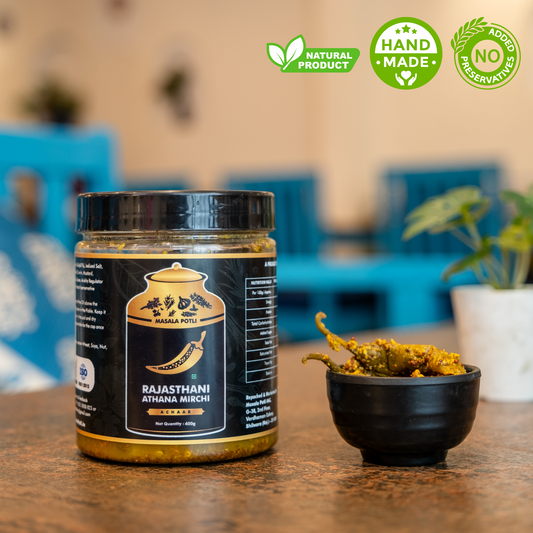
- A savory side or achar — many households round out the festive thali with a tangy pickle or chutney to balance the sweetness of the main offerings.
That last one is where a good pantry pickle earns its place. A spoon of something tangy, like a sweet lemon pickle or a classic Gujarati red chilli achar, cuts through the richness of coconut and jaggery and keeps the meal from feeling one-note. It's a small addition, but it's the kind of detail that shows up on festive thalis across generations.
A Festival That Travels Through the Kitchen
What makes Ganesh Chaturthi interesting from a food perspective is how differently it's celebrated across India, even though the underlying gesture — offering something sweet and homemade — stays constant. In Maharashtra, it's ukadiche modak and puran poli. In Karnataka and Andhra Pradesh, you'll find kadubu (a modak variant) alongside chakkara pongal. In Goa, coconut and jaggery show up again, this time in patoleo, steamed in turmeric leaves.
The common thread is coconut, jaggery, and a lot of patience — most of these dishes take time, and that time is part of the offering.
Bringing the Tradition Into a Modern Kitchen
You don't need to be an expert cook to take part in the food side of this festival. A few tips if you're making a prasad thali this year:
- Prep your coconut-jaggery filling a day ahead — it keeps well refrigerated and saves time on puja day.
- If shaping modak feels daunting, a simpler fried version or even modak-shaped cookies can carry the same spirit.
- Balance the sweetness of the thali with something tangy on the side — a small bowl of pickle or chutney goes a long way.
- Keep the panchamrit ingredients ready in advance since they're needed right at the start of the puja.
However your household celebrates, the food is what turns a religious observance into a shared, sensory memory — the kind that gets passed down without anyone writing the recipe on paper.
Wishing everyone a happy and delicious Ganesh Chaturthi from all of us at Masala Potli.