Hing 101: Why Asafoetida Is the Soul of Indian Cooking
Share on Social Media
The Spice That Smells Strong and Tastes Sublime
Open a jar of hing and you might take a step back. The aroma is sharp, sulphurous, almost startling. But drop a pinch into hot ghee and something wonderful happens: the smell mellows into a warm, savoury, onion-and-garlic-like fragrance that makes a simple dal taste like it simmered all day.
That's the magic of hing, also known as asafoetida, and it's one of the most quietly important ingredients in an Indian kitchen.
Where Does Hing Come From?
Hing is the dried resin of the Ferula plant, a giant fennel-like herb that grows in the dry regions of Iran and Afghanistan. When the thick root of a mature plant is cut, a milky, gummy sap oozes out. It's left to harden in the sun, then collected and dried into amber-brown lumps.
Pure resin is intensely strong and hard as rock, so for everyday cooking it's usually ground and blended with a little rice flour or gum arabic. That's the powdered hing most of us reach for in a kitchen tin.
Why Indian Kitchens Swear by It
Hing plays a few roles at once:
- Flavour booster: It adds a deep, savoury note, especially in vegetarian cooking.
- Onion-garlic stand-in: Jain, Sattvik and many festival-day kitchens skip onion and garlic. Hing fills that gap beautifully.
- Digestive friend: Traditionally, hing is added to lentils, beans and heavy dishes because it is believed to ease bloating and support digestion.
How to Use Hing Like a Pro
1. Bloom it in hot fat. Hing needs heat and oil to wake up. Add a tiny pinch to hot ghee or oil for a few seconds before other ingredients go in. Raw hing tastes harsh; bloomed hing tastes round and savoury.
2. Start small. A pinch between two fingers is enough for a pot of dal for four. Too much turns bitter.
3. Pair it well. Hing loves cumin, mustard seeds, curry leaves and dried red chillies in a classic tadka. It's also wonderful in kadhi, rasam, sambar, chana, rajma and potato dishes like jeera aloo.
4. Try it outside the tadka. Stir a pinch into buttermilk or chaas, sprinkle a little into batter for pakoras, or add it to pickle masala.
A Simple Hing Tadka to Try Tonight
- Heat 1 tablespoon of ghee in a small pan.
- Add 1 teaspoon cumin seeds and let them splutter.
- Add a generous pinch of hing, 1 dried red chilli and a few curry leaves.
- Pour the sizzling tadka over cooked dal, kadhi or even plain curd rice.
It takes under two minutes and changes everything.
Storing Hing
Hing's aroma is powerful enough to travel, and it can perfume your whole masala dabba. Keep it in a tightly sealed airtight container, away from heat and moisture, and ideally apart from your delicate spices. Stored well, it keeps its punch for months.
Hing Beyond the Kitchen Pot
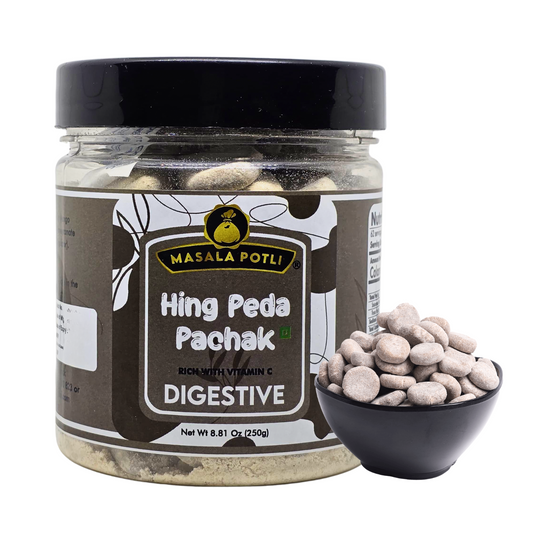
In many homes, hing also shows up after the meal. If you love that warm, tangy-savoury flavour, our Hing Peda Churan is a traditional digestive goli built around it, a nostalgic little treat to pass around after a big festive lunch.
The Takeaway
Hing may be a humble pinch, but it carries centuries of kitchen wisdom. Bloom it, respect it, and let it do its quiet work. As festival cooking season heats up, your dal will thank you.