Hing 101: The Pungent Secret Behind Indian Flavour
Share on Social Media
Open a jar of hing and your first reaction might be a step backwards. The smell is sharp, sulphurous and impossible to ignore. Then a pinch hits hot ghee, and something remarkable happens: the aroma mellows into a savoury, onion-and-garlic-like warmth that quietly holds a whole dish together. That is the magic of hing, also known as asafoetida.
What exactly is hing?
Hing is the dried resin of the roots of Ferula plants, which grow wild in the dry regions of Central Asia and Iran. Farmers cut into the thick roots, collect the milky sap, and let it harden into a gum. That raw resin is extremely strong, so it is ground and blended with a little rice flour or gum arabic to make the fine powder most of us cook with.
Why Indian kitchens love it
For generations, hing has been a cornerstone of Jain, Sattvic and many vegetarian traditions where onion and garlic are skipped. It brings that deep, savoury base note without either. It is also traditionally prized for helping the body with heavy lentils, beans and fried foods, which is why you will find it in dal, rajma, kadhi and chole across the country.
How to use hing the right way
The golden rule: always bloom it in hot fat. Raw hing powder tastes harsh, but a few seconds in sizzling oil or ghee transforms it. A little goes a very long way.
- In tadka: Add a pinch right after the cumin or mustard seeds begin to crackle, then pour over dal or kadhi.
- With vegetables: A pinch in the oil before cooking cabbage, cauliflower, or lauki adds depth and softens strong smells.
- In batters and chutneys: Stir a tiny amount into pakora batter, dhokla or a tangy chutney for savoury warmth.
- In buttermilk: A pinch of hing with roasted cumin and black salt makes a classic cooling chaas.
Storage and buying tips
Hing loses its punch when exposed to air, and its smell travels. Keep it in a tightly sealed airtight jar, away from other spices and away from moisture. Compounded hing is gentler and easier to measure; pure resin is far more intense and needs to be used sparingly.
Hing beyond the kadhai
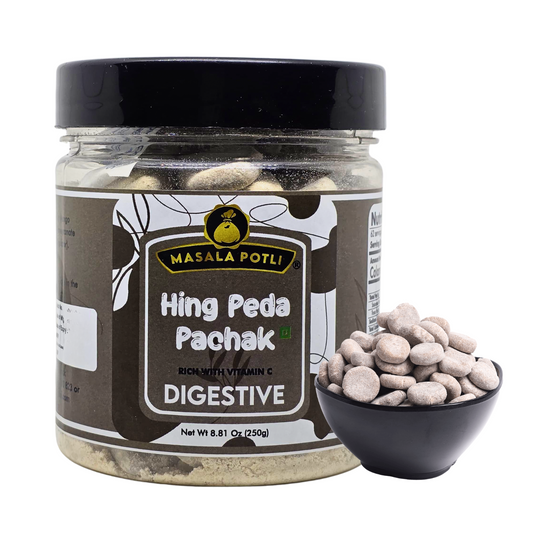
Hing is not only for cooking. It is the signature flavour in many traditional after-meal digestive treats, where its savoury tang is balanced with sweet, salty and spiced notes. If you are curious, try our Hing Peda Churan as a little finishing touch after a rich festive meal.
A pinch is all you need
With Diwali feasting just around the corner, it is a great moment to get comfortable with this humble spice. Start small, bloom it well, and let hing do its quiet, savoury work. Your dals, kadhis and festive vegetables will thank you.