
Are Indian Pickles (Achar) Actually Good for You? Health Benefits Explained
Share on Social Media
Ask five different people whether pickle is "healthy" and you'll get five different answers — somewhere between "obviously, it's basically medicine" and "isn't it just oil and salt?" The truth, like most food questions, sits in the middle.
What's actually in a jar of Indian achar
Traditional Indian pickles aren't fermented the way kimchi or sauerkraut are. Most achaar — whether it's mango, lemon, garlic, or green chilli — is preserved using mustard oil, salt, and a spice blend that typically includes turmeric, fenugreek (methi), mustard seeds, and asafoetida (hing). That distinction matters: you won't get the same live-culture probiotic benefit you'd get from a fermented food, but you do get a concentrated dose of some genuinely useful spices.
The spices doing the actual work
- Fenugreek (methi): commonly used in Ayurveda to support digestion, and often the reason achaar is eaten as a side rather than a main dish — a small amount is meant to stimulate appetite and aid digestion of a heavier meal.
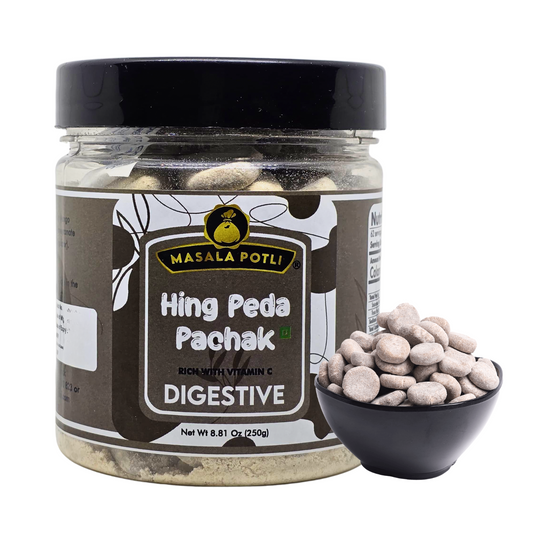
- Asafoetida (hing): a staple in digestive churan and mukhwas for a reason — it's traditionally used to ease bloating and gas, which is part of why you'll find it in pickles meant to accompany rich, oily food.
- Turmeric: contains curcumin, which has been studied for its anti-inflammatory properties, though the amount in a spoonful of pickle is modest compared to a supplement.
- Mustard oil: higher in monounsaturated fats than some other cooking oils, and it's the ingredient doing most of the preservation work in an oil-cured pickle.
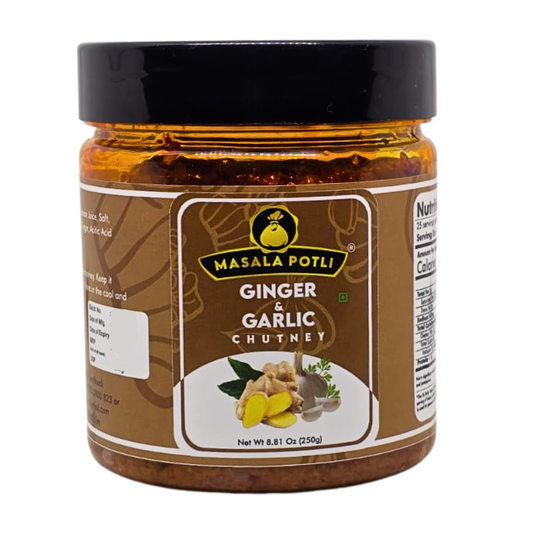
- Garlic and ginger: when used (as in garlic pickle or ginger-garlic chutney), both bring allicin and gingerol — compounds associated with immune support in traditional use.
The honest caveat: it's still a condiment
Pickle is eaten in small quantities for a reason. Most achaar is high in oil and salt, which is exactly what makes it shelf-stable without refrigeration — but it also means a tablespoon alongside your meal is the traditional serving size, not a bowlful. If you're watching your sodium intake, it's worth treating pickle the way you'd treat any concentrated condiment: a flavour boost, not a health food to eat freely.
So, good for you or not?
In moderation, a well-made achaar made with real spices and proper oil-curing is a reasonable part of an Indian meal — it's how the cuisine has balanced rich, carb-heavy staples like dal-chawal and paratha for generations. What matters more than the pickle itself is what's not in it: no artificial preservatives, no added colour, and spices used at levels that actually do something rather than just for show.
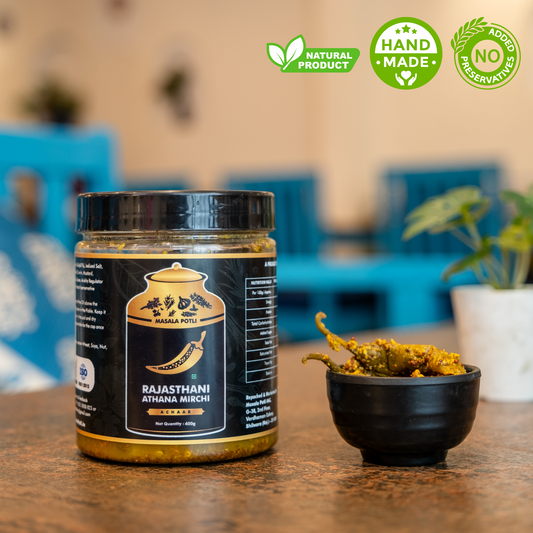
That's the standard we hold our own pickles to at Masala Potli — traditional Rajasthani, Punjabi, and Gujarati recipes, made in small batches with real mustard oil and whole spices, nothing artificial. Browse our pickle collection to find your favourite.