
Achar, Chutney, or Chunda? India's Condiments Explained
Share on Social Media
Three Jars, Three Different Jobs
Walk into any Indian kitchen and you'll likely find all three sitting side by side on a shelf: a jar of achar, a bowl of chutney, and maybe a smaller jar of something sweet and orange labeled chunda. To an outsider, they can look like variations on the same theme — mashed-up, spiced, vaguely orange-red condiments. But to anyone who grew up eating them, achar, chutney, and chunda are entirely different foods with different jobs on the plate. Here's how to actually tell them apart.
Achar: The Slow, Oil-Preserved One
Achar (pickle) is built for the long haul. Vegetables or fruits — mango, lemon, carrot, green chilli — are cut, salted, sun-dried, and packed into mustard oil with a heavy hand of spices: mustard seed, fenugreek, turmeric, red chilli. The oil isn't just flavor, it's preservation. A well-made achar can sit at room temperature for months, the flavors only deepening with time.
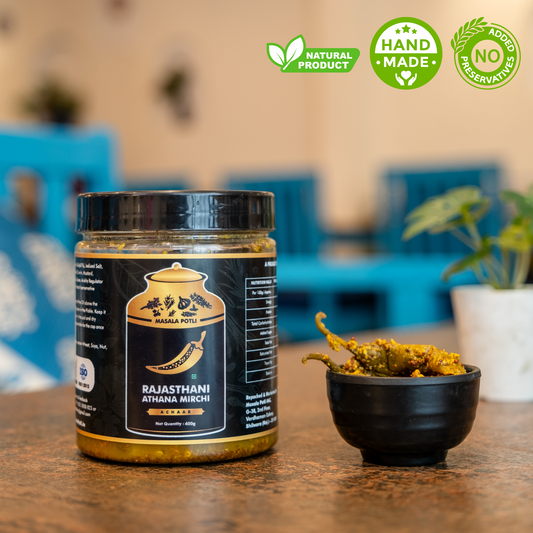
That's why achar tends to be intense — a little goes a long way. It's the condiment you eat a spoonful of alongside dal-rice or parathas, not something you'd smear generously on a sandwich. Rajasthan's fiery Athana Mirch Pickle is a good example: whole green chillies, mustard seeds, and enough heat to wake up an otherwise simple meal.
Chutney: Fresh, Fast, and Meant to Be Eaten Soon
Chutney is the sprinter of the group. Traditionally made fresh — think coriander-mint chutney ground in minutes for chaat, or a garlic chutney pounded with dried red chillies — it's built for immediate flavor, not longevity. Even the cooked, shelf-stable versions (like a garlic or ginger-garlic chutney) lean punchy and saucy rather than oily and preserved.
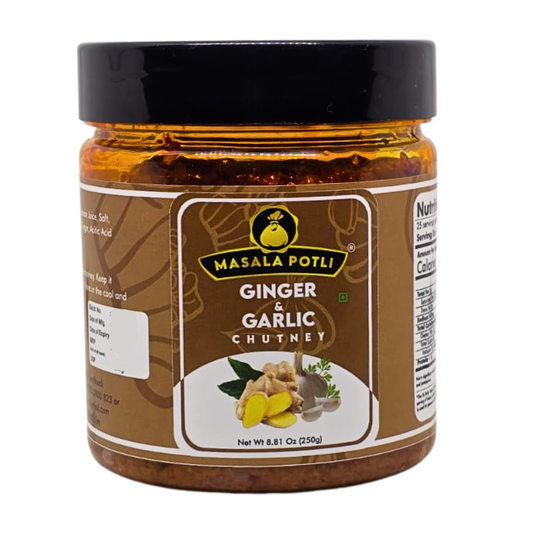
Where achar is a side you eat sparingly, chutney is often the whole point — the thing that makes a plain paratha, dosa, or plate of pakoras taste finished. A bold Garlic Chutney works exactly this way: stir a spoon into dal, spread it on toast, or use it as a dip.
Chunda: The Sweet Outlier
Chunda is where a lot of people, even within India, get confused — because it looks like achar (grated mango, orange-red color, jar-packed) but tastes nothing like it. Popularized in Gujarat, chunda is raw mango grated and slow-cooked down with sugar or jaggery until it turns jammy, with just enough red chilli and cumin to keep it from being purely sweet. No oil, no long fermentation — it's closer to a fruit preserve than a pickle.
That sweet-tangy profile makes chunda incredibly versatile: swirl it into yogurt, spoon it over parathas, pair it with theplas, or eat it straight off the spoon when you want something sweet-sour instead of dessert-sweet. Aam Chunda is the classic version — and it's worth trying if you've only ever had "mango pickle" in the achar sense.
The Quick Way to Tell Them Apart
- Achar — oil-preserved, intensely spiced, made to last months, eaten in small quantities.
- Chutney — fresh or lightly cooked, saucy, meant to be eaten within days to weeks, used generously.
- Chunda — sugar-cooked, sweet-tangy, no oil, closer to a preserve than a pickle.
Why It's Worth Knowing the Difference
Beyond kitchen trivia, knowing which is which changes how you actually use them. Reaching for achar when a dish needs a fresh, bright hit of chutney will leave it tasting heavy and oily. Reaching for chunda when you wanted something savory will throw off an entire meal. Once you know the job each one is built for, building a proper Indian thali — or even just a weeknight dinner — gets a lot easier.
If your pantry is missing one of the three, that's usually the easiest gap to close first. A good rule of thumb: keep an achar for staying power, a chutney for everyday brightness, and a chunda for when you want something sweet-tangy without reaching for dessert. Between the three, there's a condiment for pretty much anything on the table.