Dussehra Food Traditions: Fafda, Jalebi & Spicy-Sweet Joy
Share on Social Media
Every festival has a flavour. For Diwali it is ghee and dry fruits, and for Navratri it is sabudana and kuttu. For a lot of families, especially in Gujarat, Dussehra means one thing: fafda and jalebi on a Sunday-morning-style spread, eaten warm and shared with everyone.
Dussehra falls in the third week of October this year, so it is a good time to look at why this pairing works and how to build your own version at home.
Why Fafda and Jalebi Belong Together
Fafda is a crisp, savoury strip made from besan (gram flour), carom seeds and a pinch of salt. It is light and crunchy with a gentle peppery bite. Jalebi is the opposite: a coil of fried batter soaked in saffron-scented sugar syrup, sticky and bright orange.
Together they give you salty against sweet, crunchy against juicy, and plain against bold. That contrast is the whole idea. It is the same logic as a samosa with a sweet chutney or a plate of chaat that hits every taste at once.
The Third Player: Something Tangy and Spicy
Ask anyone who grew up eating this combination and they will tell you that fafda is never served alone. It comes with a papaya-based chutney (the classic), fried green chillies, and often a spoonful of something sharp to cut through the richness.
If you are putting together a spread at home, here is a simple checklist:
- Fafda or gathiya from your favourite local shop, or homemade if you are feeling brave
- Hot jalebi, ideally fresh from the kadhai
- Fried or roasted green chillies with a little salt
- A tangy side, such as a spicy pickle or a chutney
- Sliced onion and lemon wedges for freshness
A Little Sprinkle Goes a Long Way
Here is a small kitchen trick: a light dusting of a tangy masala over plain fafda wakes it up. Our Indori Jeeravan Masala is made for exactly this kind of thing. It has cumin, tang and a little heat, and it is usually reached for with poha, but it works beautifully on crunchy snacks too. Sprinkle it on just before serving so the fafda stays crisp.
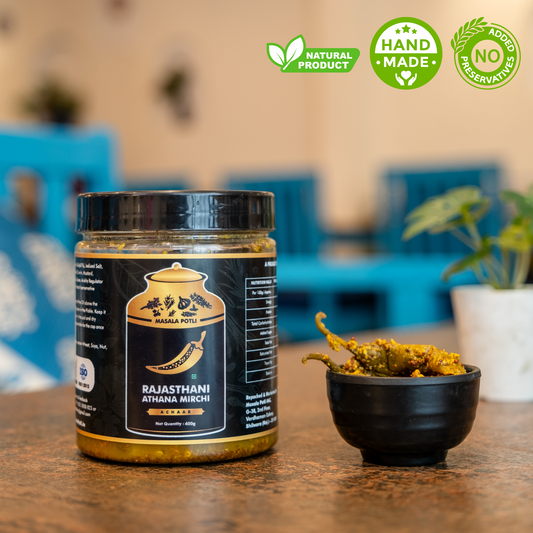
For the tangy side, a spoonful of a bold pickle does the same job as the papaya chutney. A fiery Gujarati Red Chilli Pickle is a natural partner: just a little on the edge of the plate, picked up with each bite of fafda.
Beyond Gujarat: Dussehra on a Plate
Of course, Dussehra tables look different across India. In many homes the day is marked with a festive lunch, sweets shared with neighbours, and family recipes that only come out once a year. The common thread is that the food is meant to be shared, and that it celebrates the end of a long festive build-up.
If your family has a Dussehra dish of its own, we would love to hear about it. Food traditions travel through kitchens, and every household adds its own twist.
Tips for Hosting a Relaxed Festive Brunch
- Buy the fried items fresh. Fafda and jalebi are best the same day. Order ahead so you are not standing in a queue on the morning itself.
- Prep the sides the night before. Slice onions, cut lemons and set out pickles and chutneys in small bowls.
- Keep something warm. A pot of masala chai on the stove makes the whole spread feel complete.
- Serve in small portions. Rich, fried and sweet food is lovely, but lighter plates let everyone go back for seconds.
Make It Yours
Festival food is not about perfection. It is about the ritual: the early errand to the sweet shop, the paper plates, the argument over who gets the last jalebi. Whether you keep it traditional or add your own spin, a little spice and a little sweetness is all it takes.
Happy Dussehra from all of us at Masala Potli. Explore more on our full range of spices, seasonings and pickles to stock your festive table.