
Mukhwas 101: The Indian After-Meal Digestive Ritual
Share on Social Media
Walk into any Indian home after dinner and you'll see it: a small bowl or tin gets passed around, and everyone takes a pinch of something sweet, sour, salty, or all three at once. This is mukhwas — literally "mouth freshener" — and it's one of the oldest food rituals in Indian households, older than after-dinner mints by a few thousand years.
Why Indians Munch After Every Meal
Mukhwas isn't just a habit, it's functional. Most traditional Indian meals are rich, spiced, and heavy on ghee or oil, and the ingredients that go into mukhwas — fennel, ajwain, dry ginger, amla, hing — are chosen specifically because they help the stomach settle. Ayurveda has long treated these as pachak, or digestive aids, taken right after eating to reduce bloating, freshen breath, and ease the body into digestion mode. Modern nutrition backs a lot of this up too: fennel and ajwain both have documented carminative properties, and amla is one of the richest natural sources of vitamin C you'll find in any kitchen.
Every region and every household has its own version, but three categories show up again and again on Indian dining tables.
Three Ways to End a Meal, the Traditional Way
Amla Pachak Candy — Sour, salty, and just a little sweet, this is amla (Indian gooseberry) worked into a chewy digestive candy. It's the one to reach for if your meal ran heavy — amla is packed with vitamin C and has been used in Ayurveda for centuries to support digestion and immunity in one bite.
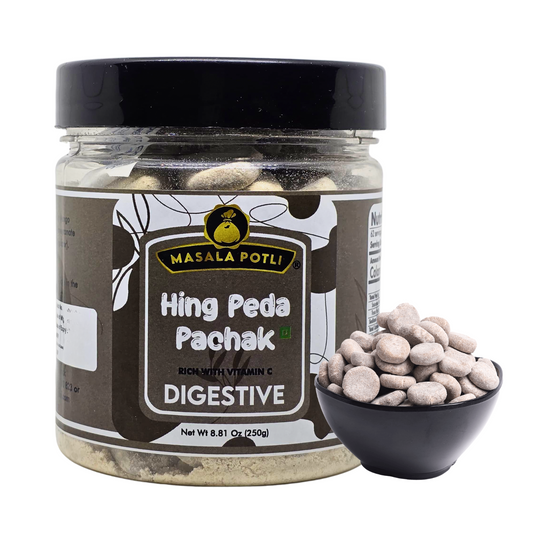
Hing Peda Churan — If you grew up with a grandmother who kept a steel tin of dark, tangy churan on the dining table, this is that tin. Built around hing (asafoetida), a spice used in Indian kitchens specifically for its digestive punch, this churan is sharp, salty-sour, and does its job fast.
Aam Papad — The sweeter option, and usually the one kids ask for first. Sun-dried mango worked into a tangy, chewy churan goli, it's mukhwas that doubles as a snack — good for lunchboxes, road trips, or just keeping a jar on your desk.
Building Your Own Mukhwas Box
You don't need to pick just one. A proper mukhwas box usually has some variety — something sour, something salty, something sweet — so there's an option depending on what you just ate and how you're feeling. A simple starting combination:
- Amla Pachak Candy for after a heavy, oily meal
- Hing Peda Churan for when you need something sharp and fast-acting
- Aam Papad for a lighter, snackable option through the day
Keep them in small jars near the dining table the way most Indian households do, and it stops being "dessert" and starts being part of the meal itself.
A Ritual Worth Keeping
In a lot of modern kitchens, mukhwas has quietly been replaced by mints and gum — convenient, but missing the point. The ingredients in traditional churan and pachak candies aren't there just for flavor; they're doing a job your after-dinner mint never will. Next time a meal leaves you a little too full, skip the mint and reach for a pinch of something your grandmother would recognize instead.
All three of these are made in small batches using the same recipes Indian households have relied on for generations — no shortcuts, just the ingredients that were always meant to be there.