
Mustard Oil vs Refined Oil in Pickles: Which One is Better?
Share on Social Media
When it comes to authentic Indian pickles, one ingredient often makes the biggest difference—the oil.
Whether you're enjoying a spicy mango pickle, tangy lemon pickle, or traditional green chilli pickle, the type of oil used affects not only the flavour but also the shelf life and nutritional value.
The two most common choices are mustard oil and refined oil. While both can be used for pickling, they produce very different results.
Let's understand the differences.
Why Does Oil Matter in Pickles?
Oil acts as much more than just an ingredient.
It helps:
- Preserve the pickle naturally
- Prevent moisture from spoiling the ingredients
- Carry the flavours of spices
- Enhance aroma and texture
- Increase shelf life
Choosing the right oil is one of the most important steps in making quality pickles.
1. Taste & Aroma
Mustard Oil
Mustard oil has a bold, pungent aroma that gives Indian pickles their unmistakable traditional flavour.
Once properly heated and cooled before use, it develops a rich taste that blends beautifully with spices like fenugreek, fennel, mustard seeds, turmeric, and red chilli.
It is especially popular in North Indian and Rajasthani pickles.
Best for
- Mango Pickle
- Lemon Pickle
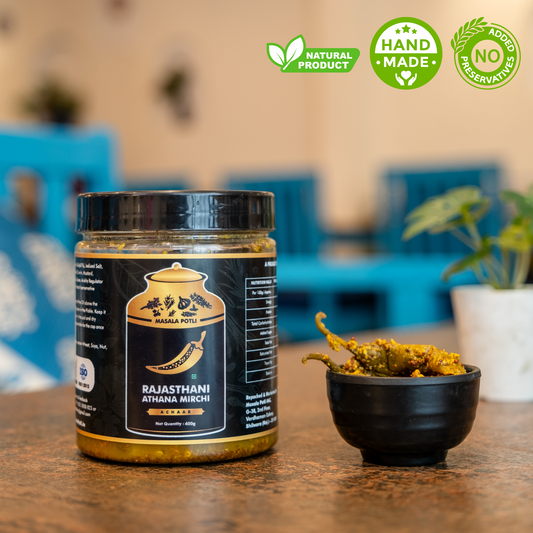
- Green Chilli Pickle
- Mixed Pickle
- Garlic Pickle
Refined Oil
Refined oil has a mild and neutral taste.
While it allows the vegetables or fruits to remain the dominant flavour, it lacks the characteristic depth that people expect from traditional Indian pickles.
The result is often a milder pickle that feels less authentic.
Winner for Taste
Mustard Oil
Its rich aroma and traditional flavour make it the preferred choice for authentic Indian pickles.
2. Health Benefits
Mustard Oil
Mustard oil naturally contains:
- Monounsaturated fats (MUFA)
- Polyunsaturated fats (PUFA)
- Omega-3 fatty acids
- Natural antioxidants
It has also been traditionally valued for its antibacterial and antifungal properties, which help preserve pickles.
Refined Oil
Refined oils are processed at high temperatures and undergo several purification steps.
While many refined oils are safe for cooking, processing can reduce naturally occurring compounds present in the original oil.
They also do not contribute the same traditional flavour or preservation qualities associated with mustard oil.
Winner for Nutrition
Mustard Oil
Its traditional composition and natural properties make it a preferred choice for many homemade pickle recipes.
3. Shelf Life
One reason Indian households have relied on mustard oil for generations is its ability to help preserve pickles.
When combined with:
- Salt
- Spices
- Proper hygiene
- Airtight storage
mustard oil creates a protective layer that helps reduce spoilage.
Refined oil also preserves pickles but generally doesn't provide the same traditional preservation performance.
Winner for Shelf Life
Mustard Oil
4. Traditional Authenticity
Travel anywhere across Rajasthan, Punjab, Uttar Pradesh, Haryana, or Madhya Pradesh, and you'll notice one thing in common:
Traditional pickles are almost always prepared using mustard oil.
Its flavour has become synonymous with authentic Indian achaar.
For many families, the aroma of mustard oil instantly reminds them of homemade pickles prepared by parents and grandparents.