Hing 101: The Tiny Pinch That Transforms Indian Cooking
Share on Social Media
Open a jar of hing and your first reaction might be a step backwards. The smell is strong, sulphurous and a little startling. Then it hits hot oil, and something remarkable happens: the sharpness melts into a warm, savoury aroma that sits somewhere between fried onion and roasted garlic. That transformation is why hing has been a quiet hero of Indian kitchens for centuries.
What exactly is hing?
Hing, also called asafoetida, is a dried resin taken from the roots of giant fennel-like plants (Ferula) that grow in Central Asia and Iran. The milky sap is collected, dried into a hard gum, and then ground. Because pure resin is very hard and extremely potent, it is usually sold as a fine powder blended with a little rice flour or wheat flour so it is easier to measure and dissolve.
Why it matters in Indian cooking
In many traditions, especially Jain, Kashmiri Pandit and some Gujarati and Marwari households, onion and garlic are left out of everyday cooking. Hing steps in to supply that missing savoury depth. It also has a long reputation as a kitchen companion to lentils and beans, which is why so many dal recipes start with it.
How to use it: the golden rules
- Bloom it in hot fat. Add a tiny pinch to ghee or oil for a few seconds before other ingredients. Raw hing tastes harsh; bloomed hing tastes rounded and savoury.
- Less is more. A pinch (about a quarter teaspoon) is enough for a pot of dal that serves four. Too much turns bitter.
- Add it early in tadka. Hing goes in right after the whole spices like cumin or mustard seeds begin to crackle, just before turmeric or chilli.
- Store it airtight. Its aroma is powerful enough to perfume the rest of your spice shelf, so keep the jar tightly sealed.
Where to use it beyond dal
Once you get comfortable, hing shows up in more places than you expect. A pinch in kadhi keeps the yoghurt gravy fragrant. It lifts simple sabzis like aloo, lauki or cabbage. It goes into pickle masalas, into the tempering for khichdi, and even into buttermilk (chaas) with roasted cumin for a cooling summer drink. Stir a little into batter for pakoras or bhajiyas and the whole kitchen smells like a festival is coming.
Hing after the meal
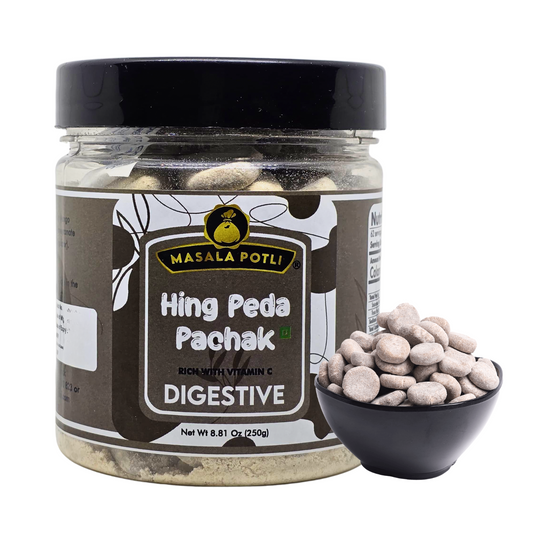
Hing isn't only for the stovetop. In many homes it also appears as a traditional after-meal digestive. Our Hing Peda Churan is a tangy, spiced, bite-sized take on that ritual, the kind of thing you pop after a heavy dinner while the conversation carries on around the table.
A simple hing tadka to try tonight
- Heat 1 tablespoon ghee in a small pan.
- Add 1 teaspoon cumin seeds and let them sizzle.
- Add a pinch of hing, then 1 to 2 dried red chillies.
- Count to five, then pour it, sizzling, over a bowl of hot dal or khichdi.
That's it. Thirty seconds of effort, and dinner tastes like it took an hour. Once you learn to respect the pinch, hing quickly becomes one of those ingredients you notice most when it's missing.
Got a family recipe that starts with hing? We'd love to hear about it. Share it with us on Instagram and tag Masala Potli.